DSML Kazakhstan LogoDSMLKZ
HomeAboutPeopleNewsAI RadarJobsResearchEventsArticles
DSML Kazakhstan Logo© 2026 DSML Kazakhstan.
AboutCollaborateCommunity GuidelinesPrivacyTelegramAI Radar RSSYouTubeLinkedInInstagram

    News

    Latest news and updates from DSML Kazakhstan community
    Stay up to date with the latest events

    Showing 102 news posts

    Kazakhstan's Axiom team wins the K2 Think Hackathon

    Fresh news11 Nov 2025
    Kazakhstan's Axiom team wins the K2 Think Hackathon

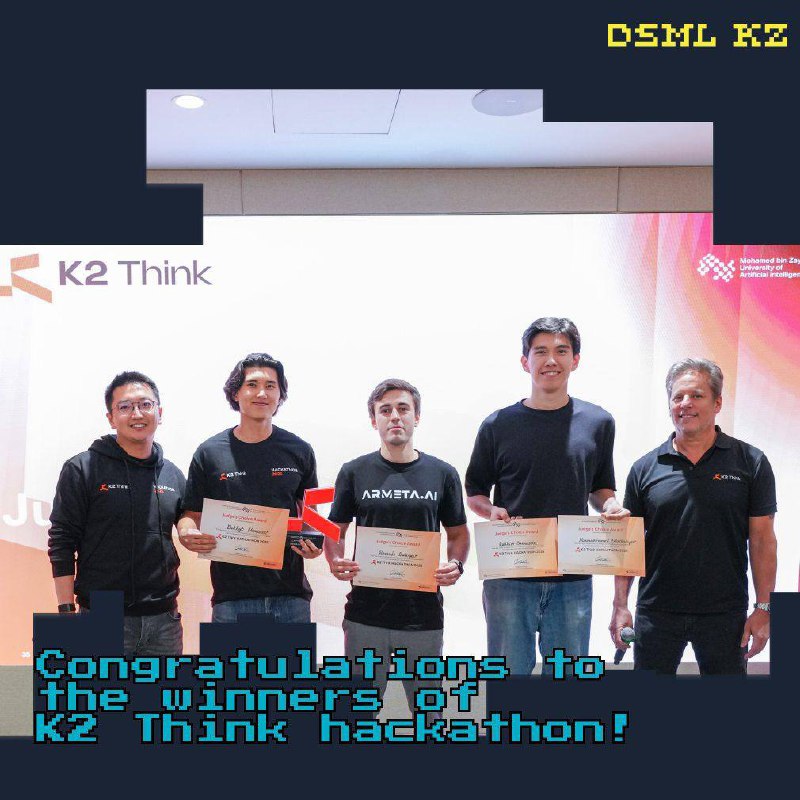
    Congratulations to the winners of the K2 Think Hackathon!

    The hackathon attracted 900 teams from more than 30 countries. Finalists met in Abu Dhabi to build a project with the open 32B K2 Think language model in 48 hours. Teams included participants from Google DeepMind, Cornell University, Harvard Medical School, Hong Kong University of Science and Technology, MBZUAI, and others.

    Kazakhstan's Axiom team won: Bakhyt Momunov, Nurmukhamed Zibatkaliyev, and Alexander Shakiyev.

    Drawing on their mathematical-olympiad experience, the team built a Math Research and Proof assistant. They adapted K2 Think to automatically translate mathematical proofs from natural human language into formal, machine-readable Lean. Regardless of length or complexity, the formalized proof can then be checked precisely for logical validity and correctness.

    Discuss · 08
    Telegram

    K2 Think Hackathon in Abu Dhabi

    Fresh news14 Oct 2025
    K2 Think Hackathon in Abu Dhabi

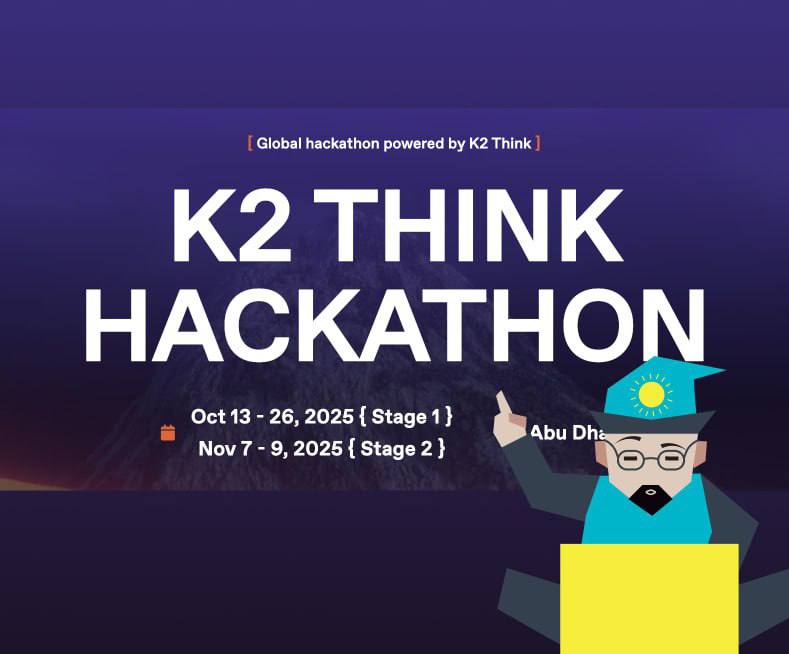
    K2 Think Hackathon | Abu Dhabi | November 7–9

    Build a project using K2 Think, the open 32B reasoning model from MBZUAI and G42 designed for deep thinking. The hackathon has two stages:

    • Online Global Idea Call: Applicants submit a one-page document describing a project idea that uses K2 Think

    Deadline: October 26 at 10:00 Astana time

    • A 48-hour final for the top 10 teams at the MBZUAI campus in Abu Dhabi on November 7–9

    The hackathon is open worldwide with no age restrictions. Finalists receive a travel grant of up to AED 20,000 per person for flights, accommodation, and meals.

    Registration: hackathon.k2think.ai/#apply

    Discuss · 03
    Telegram

    Kazakhstani school students place third at Technology Olympics 2025

    Fresh news2 Oct 2025
    Kazakhstani school students place third at Technology Olympics 2025

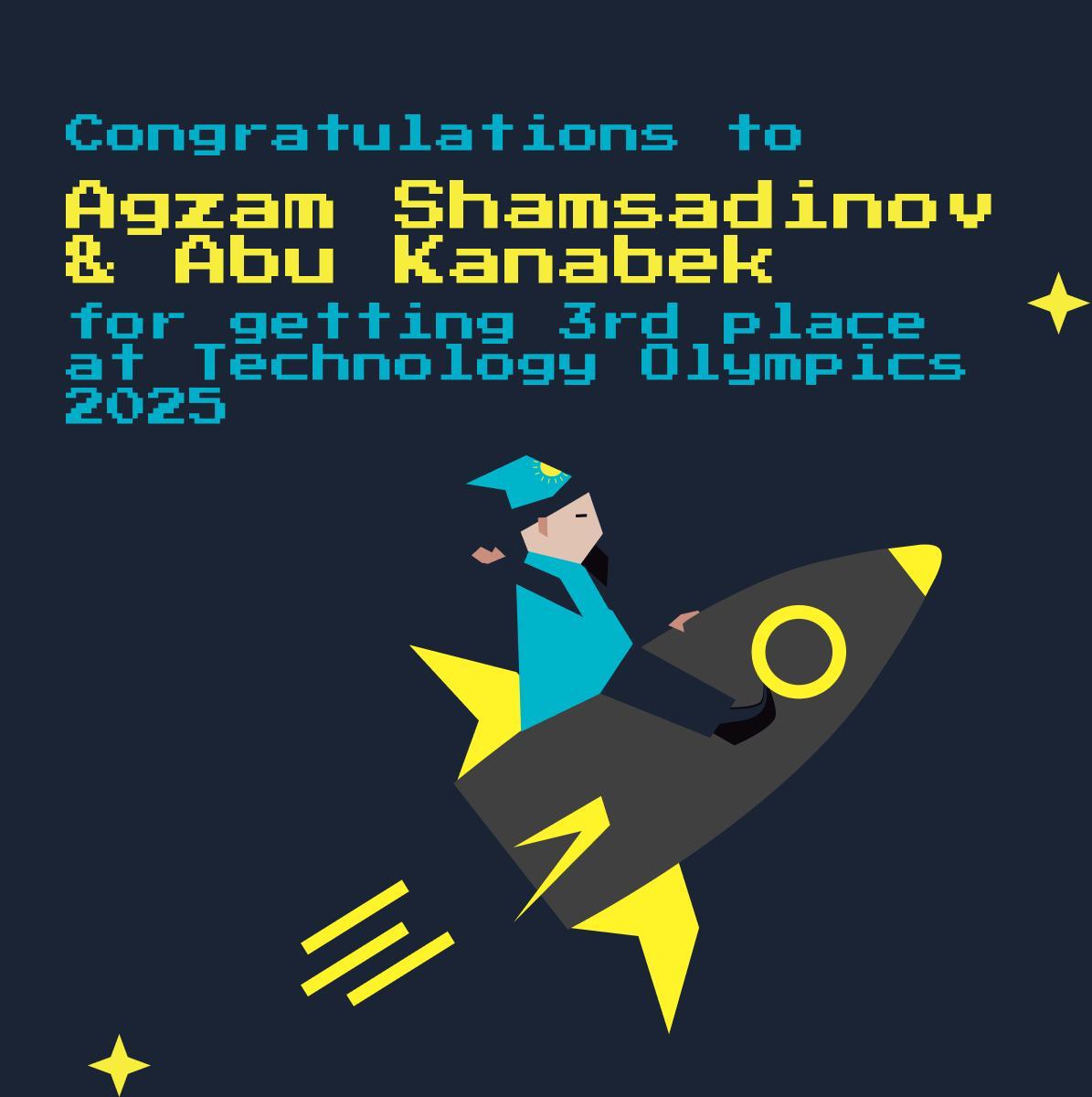
    On September 25, community residents Agzam Shamsadinov, Grade 11, and Abu Kanabek, Grade 10, won third place in the semifinal of Iran's international university data-analysis olympiad, Technology Olympics 2025!

    The team competition included six problems covering classification, regression, and time series. Teams had 24 hours to solve them.

    The students placed third overall and were invited to the final event in Tehran on October 30.

    Discuss · 04
    Telegram

    Higgsfield AI becomes Kazakhstan's first unicorn

    Fresh news30 Sep 2025
    Higgsfield AI becomes Kazakhstan's first unicorn

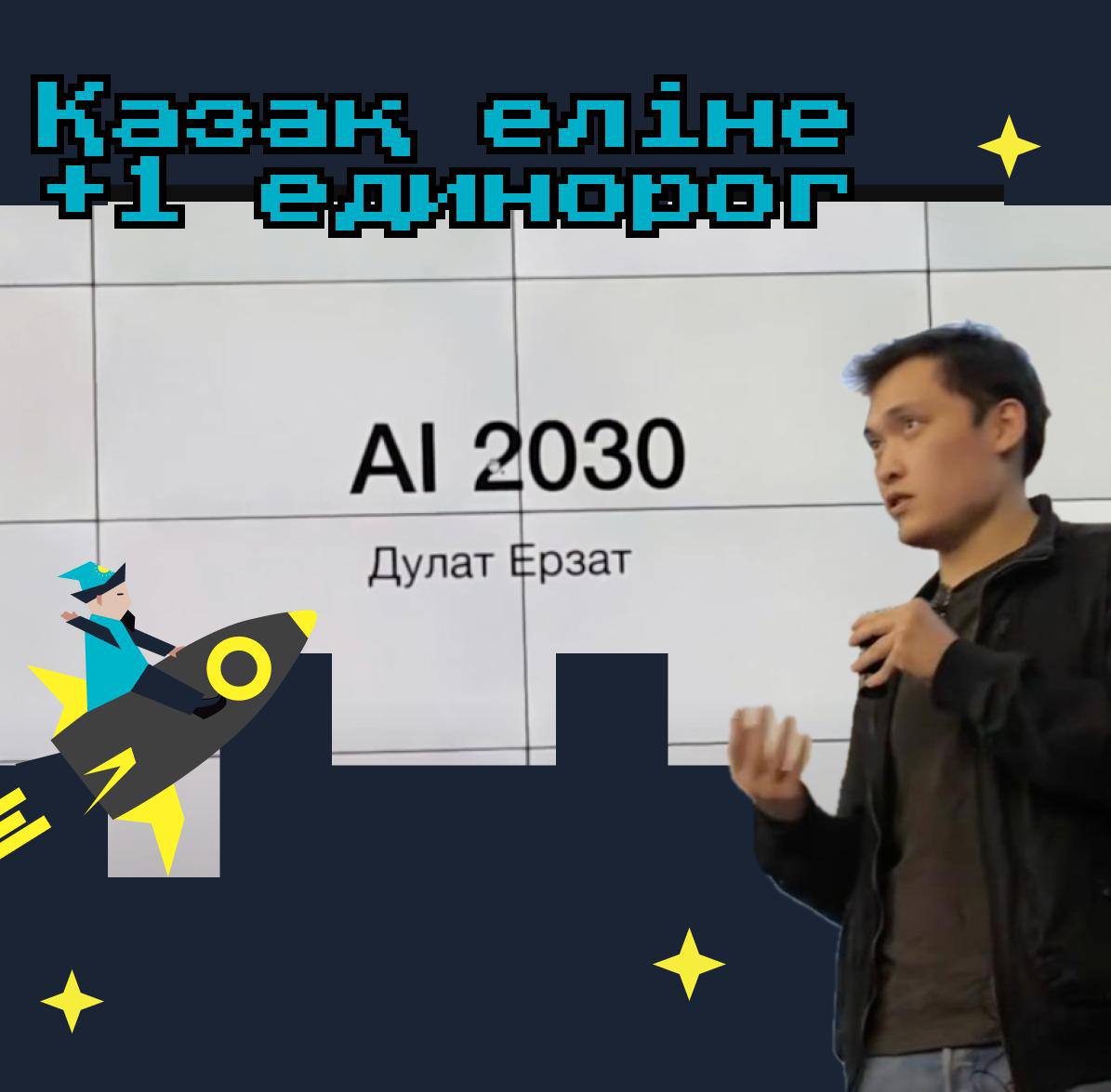
    Higgsfield AI recently became Kazakhstan's first unicorn with a valuation above $1 billion. Everyone has probably heard the news, as this is a major event not only for the AI community but for Kazakhstan as a whole.

    We simply want to congratulate the Higgsfield team as friends and celebrate their success. Yerzat @rlprompt is a long-standing member of our community and an example of how one person can drive an industry. It is wonderful to see Higgsfield discussed everywhere as the company grows so rapidly!

    Today is a good occasion to revisit Yerzat's vision from one of our meetups in 2018, long before the widespread AI hype: https://youtu.be/l5V_UD5ouG0?si=zEi0rH3ucBHqU6s0

    Discuss · 03
    Telegram

    DSML Reading Club #7: causal representation learning

    Fresh news9 Sep 2025
    DSML Reading Club #7: causal representation learning

    DSML Reading Club Meeting #7

    Causal Representation Learning from Multiple Distributions: A General Setting. In many problems, measured variables are functions of latent causal variables such as underlying concepts or objects. Recovering these latent variables and their causal relationships helps make predictions in changing environments and apply appropriate changes to a system. This is known as causal representation learning. The paper studies a general, fully nonparametric setting with multiple distributions and does not assume that distribution changes come from hard interventions.

    At the meeting, we will discuss:

    • What causal representation learning is
    • How it can be applied, using EEG as an example
    • Parametric and nonparametric settings and VAEs
    • Saturday, September 13, 11:00 Kazakhstan time
    • Add to calendar
    • meet.google.com/aeo-oivb-zdp
    • Speaker: Ayana Mussabayeva
    Discuss · 02
    Telegram
    PreviousPage 6 of 21Next