DSML Kazakhstan LogoDSMLKZ
HomeAboutPeopleNewsAI RadarJobsResearchEventsArticles
DSML Kazakhstan Logo© 2026 DSML Kazakhstan.
AboutCollaborateCommunity GuidelinesTelegramAI Radar RSSYouTubeLinkedInInstagram

    News

    Latest news and updates from DSML Kazakhstan community
    Stay up to date with the latest events

    Showing 94 news posts

    Cerebra joins MedTech Innovator

    Fresh news11 Jul 2023

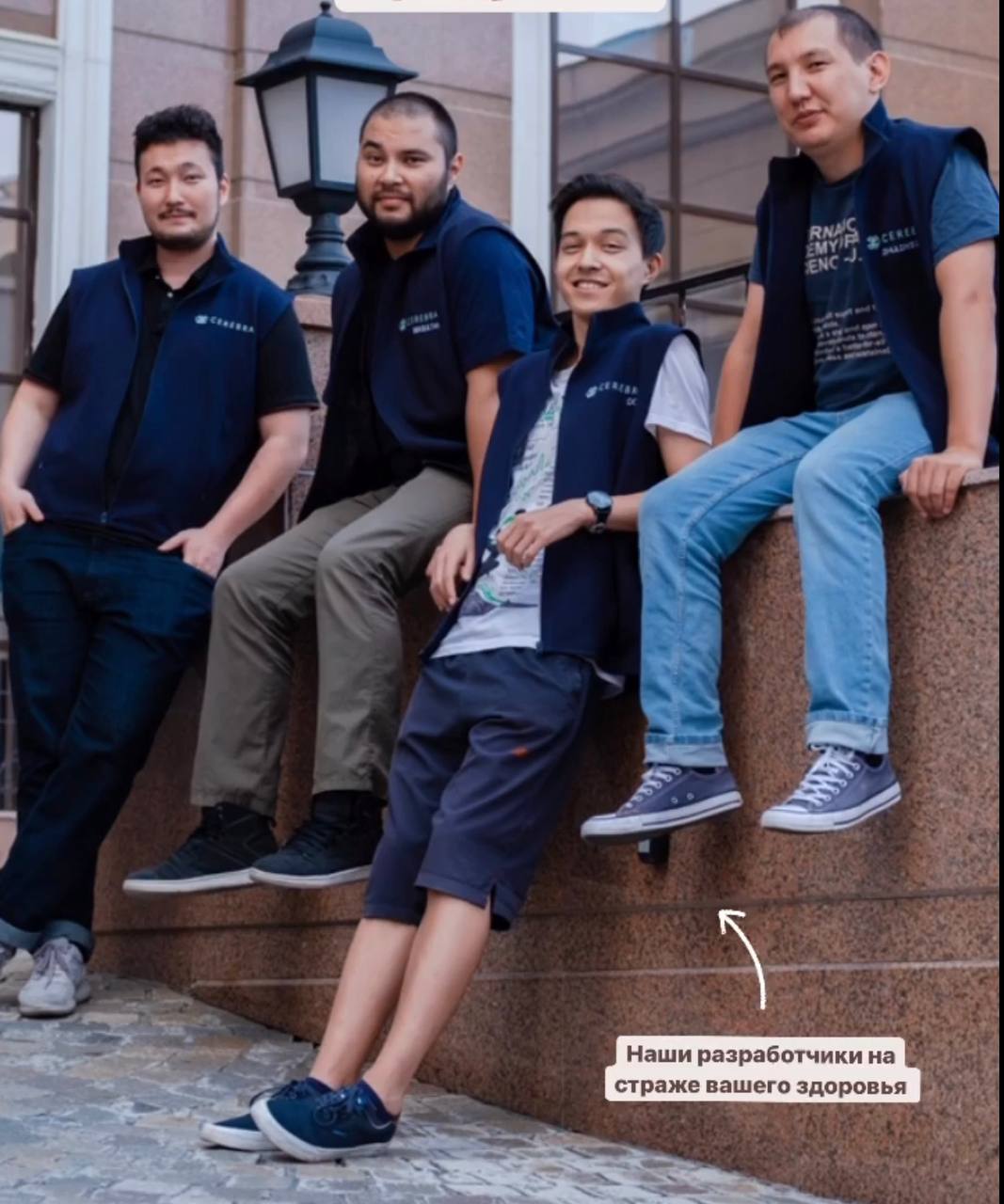
    Great news from Kazakhstani startup Cerebra. The company, which develops AI for neuroradiology and provides automated diagnosis of ischemic and hemorrhagic stroke, was invited to join MedTech Innovator, the largest international medical-technology accelerator.

    MedTech Innovator is more than a leading medtech startup accelerator: it aims to improve patients' quality of life by supporting and developing companies that are transforming healthcare. The accelerator's portfolio already includes 509 graduates, more than 200 FDA approvals and clearances, and approximately $6.8 billion in project funding.

    Through the accelerator, Cerebra received mentorship from Zimmer Biomet, a global medical-equipment company with more than a century of history.

    Cerebra founder Doszhan Zhusupov nevertheless emphasizes the need for greater support at home. We hope the company's future success becomes an important example for Kazakhstan's IT community and encourages stronger government involvement in supporting innovative projects.

    Discuss · 01
    Telegram

    Two SDU programs in data and computer science

    Fresh news10 Jul 2023
    Two SDU programs in data and computer science

    UNT subjects: Mathematics + Computer Science. The minimum UNT score to apply for a grant is 80.

    • STATISTICS AND DATA SCIENCE (6B01501)

    The program places greater emphasis on mathematics and data analysis. Core courses: Calculus (1, 3); Linear Algebra; Discrete Maths; Ordinary Differential Equations; ICT Algorithms and Programming (1, 2); Database Management Systems (1, 2); Intro to Data Analysis; Intro to Probability; Statistics (1, 2); Modern Regression Analysis (1, 2); Special Topics of Data Science; Testing of Statistical Hypotheses; Data Wrangling and Visualization.

    • COMPUTER SCIENCE (6B06102)

    The program places greater emphasis on IT development. Core courses: Mathematics for Computer Science (1, 2); Discrete Maths; Linear Algebra; Intro to Algorithms; Information & Communication Technologies; Advanced Algorithms; Probability & Mathematical Statistics; Digital Design; Computer Architecture; Intro to Machine Learning; Data Analysis Systems; Software Engineering; Computer Vision; Deep Learning. Tracks were also introduced recently, including a Data Science & AI track.

    Tuition information: Annual tuition at SDU for the selected programs is 1,680,000 tenge.

    Discuss · 01
    Telegram

    Two KBTU programs in software and data analytics

    Fresh news8 Jul 2023
    Two KBTU programs in software and data analytics
    • COMPUTER ENGINEERING AND SOFTWARE, School of Information Technology and Engineering (FIT).

    The program focuses on practical IT development and computer science courses. Core courses: Programming Principles (1, 2); Algorithms and Data Structures; Object-Oriented Programming; Discrete Structures; Databases; Software Engineering. From the fourth semester, students can choose career tracks, each consisting of 2–7 electives. The Big Data Analysis track includes Advanced Statistics, Data Mining, Machine Learning, Data Storage and Analysis, Deep Learning, Intro to AI, and Computational Theory.

    • INFORMATION SYSTEMS (KBTU) +

    DATA SCIENCE & BUSINESS ANALYTICS (LSE). The program places greater emphasis on economics and mathematics. Students receive two degrees, from KBTU and the London School of Economics (LSE). Core courses: Principles of Statistics (1, 2); Statistics (1, 2); Advanced Statistics (1, 2); Principles of Calculus (1, 2); Calculus (1, 2); Algebra (1, 2); Mathematical Methods (1, 2); Microeconomics; Macroeconomics; Econometrics (1, 2); Business and Management in a Global Context (1, 2); Programming for Data Science (1, 2); Machine Learning (1, 2).

    Tuition information: Annual paid tuition at KBTU is 2,400,000 tenge. The total cost for four years is 9,600,000 tenge.

    Under the dual-degree program, students pay tuition at the London School of Economics because the grant does not cover it. The total is approximately 4,810,000 tenge: year 1 — $700 for AP exam preparation; year 2 — 1,700,000 tenge; year 3 — 1,400,000 tenge; year 4 — 1,400,000 tenge. For fee-paying students, the combined four-year cost of KBTU and LSE is 14,410,000 tenge.

    Course retakes are paid. Depending on the course load, a retake may cost from 80,000 to 160,000 tenge. Students with good semester results but a poor exam grade can retake only the exam for 35,000 tenge.

    Discuss · 00
    Telegram

    KBTU: strengths and weaknesses

    Fresh news8 Jul 2023
    KBTU: strengths and weaknesses

    The Kazakh-British Technical University (KBTU) placed third in the overall university ranking. Student and alumni reviews describe it as a university with strong faculty, relevant programs, and high-quality education.

    Strengths of KBTU:

    • Quality of education: KBTU instructors are described as competent, and many have practical experience in their fields. The university offers dual-degree programs. KBTU ranked first for applied-course quality and third for foundational disciplines.
    • University brand: The university has a strong reputation. Students note the absence of corruption and a robust plagiarism-detection system.
    • Good opportunities for personal development: Students mention the ability to choose courses, join student organizations, conduct research, and receive scholarships.

    Weaknesses of KBTU:

    • Administrative issues: Many students report difficulties interacting with the university administration, criticizing slow processes, bureaucracy, and communication problems.
    • Quality of some instructors: Although most faculty members are highly qualified, some are criticized for dull lectures or a lack of practical experience.
    • Tuition cost: Some students consider the university expensive. Retakes are also reported to be costly.
    • Infrastructure issues: The academic building is not entirely suited to the university's needs, and the dormitories are far from campus. KBTU ranked fifth for dormitory quality.
    • Timetable and workload: Some students consider the schedule poorly planned. Undergraduate classes may be set on Sundays or weekday evenings from 18:00 to 22:00, and the timetable can include inconvenient gaps lasting several hours.
    Discuss · 02
    Telegram

    Admission and programs at the MSU Kazakhstan Branch

    Fresh news7 Jul 2023
    Admission and programs at the MSU Kazakhstan Branch

    UNT scores are not considered for admission to the MSU Kazakhstan Branch. Documents are accepted electronically until July 10. Entrance exams follow: Mathematics on July 12 and Russian Language on July 15.

    July 12 — Mathematics; July 15 — Russian Language.

    We selected two programs at the MSU Kazakhstan Branch:

    • APPLIED MATHEMATICS AND COMPUTER SCIENCE, Faculty of Computational Mathematics and Cybernetics.

    The program focuses on applied mathematics. Core courses: Mathematical Analysis (1, 3); Mathematical Modeling; Real and Complex Analysis; Functional Analysis; Algebra and Geometry; Algorithms and Algorithmic Languages; Computer Architecture and Assembly Language; Computer Graphics; Differential Equations; Probability Theory and Mathematical Statistics; Programming Languages and Methods; Operating Systems; Numerical Methods (1, 2); Optimization Methods; Discrete Mathematics (1, 2); Equations of Mathematical Physics; Fundamentals of Cybernetics; Game Theory and Operations Research; Optimal Control.

    • MATHEMATICS, Faculty of Mechanics and Mathematics.

    The program places greater emphasis on classical mathematics. Core courses: Mathematical Analysis (1); Complex Analysis; Functional Analysis; Linear Algebra and Geometry; Analytic Geometry; Introduction to Mathematical Logic and Algorithm Theory; Classical Differential Geometry; Differential Geometry and Topology; Probability Theory; Stochastic Processes; Partial Differential Equations; Number Theory; Mathematical Statistics; Numerical Methods; Calculus of Variations and Optimal Control; Computer Work and Programming.

    Study format: Classes at the MSU Kazakhstan Branch are organized in blocks.

    • Depending on the course volume, two instructors from Moscow come once or twice per semester to deliver lectures and seminars.
    • A block lasts two weeks, during which students have four classes in that single subject each day—around 20 mathematical-analysis classes per week, for example.
    • Each block ends with a pass/fail assessment or an exam.
    • Between blocks, the timetable is lighter and consists mainly of humanities subjects.
    • From the third year, students move to Moscow and follow the regular study schedule there.

    Tuition information: Students at the MSU Kazakhstan Branch study on state-funded grants.

    Discuss · 00
    Telegram
    PreviousPage 17 of 19Next