Latest news and updates from DSML Kazakhstan community
Stay up to date with the latest events
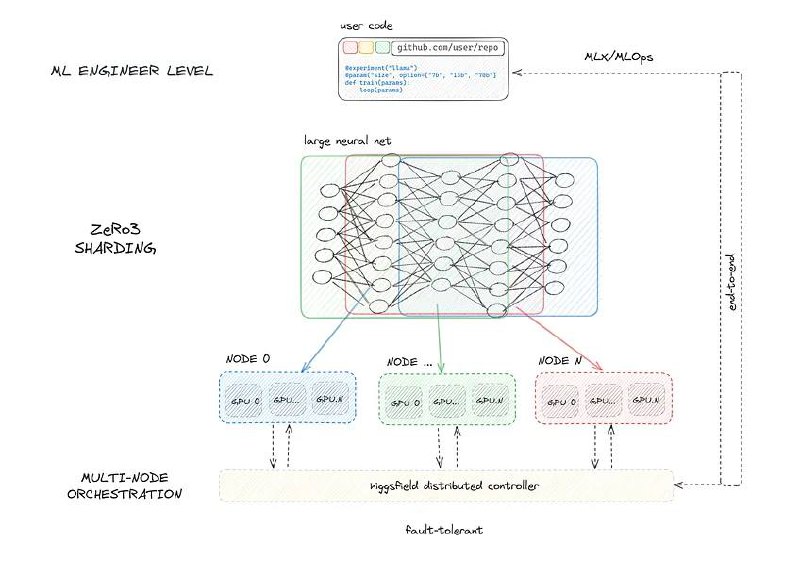
The tool manages clusters while supporting scalability and fault tolerance.
The library helps you use a GPU cluster efficiently to build systems comparable in power to ChatGPT.
Read the blog post here.
Wishing everyone successful experiments! 🚀
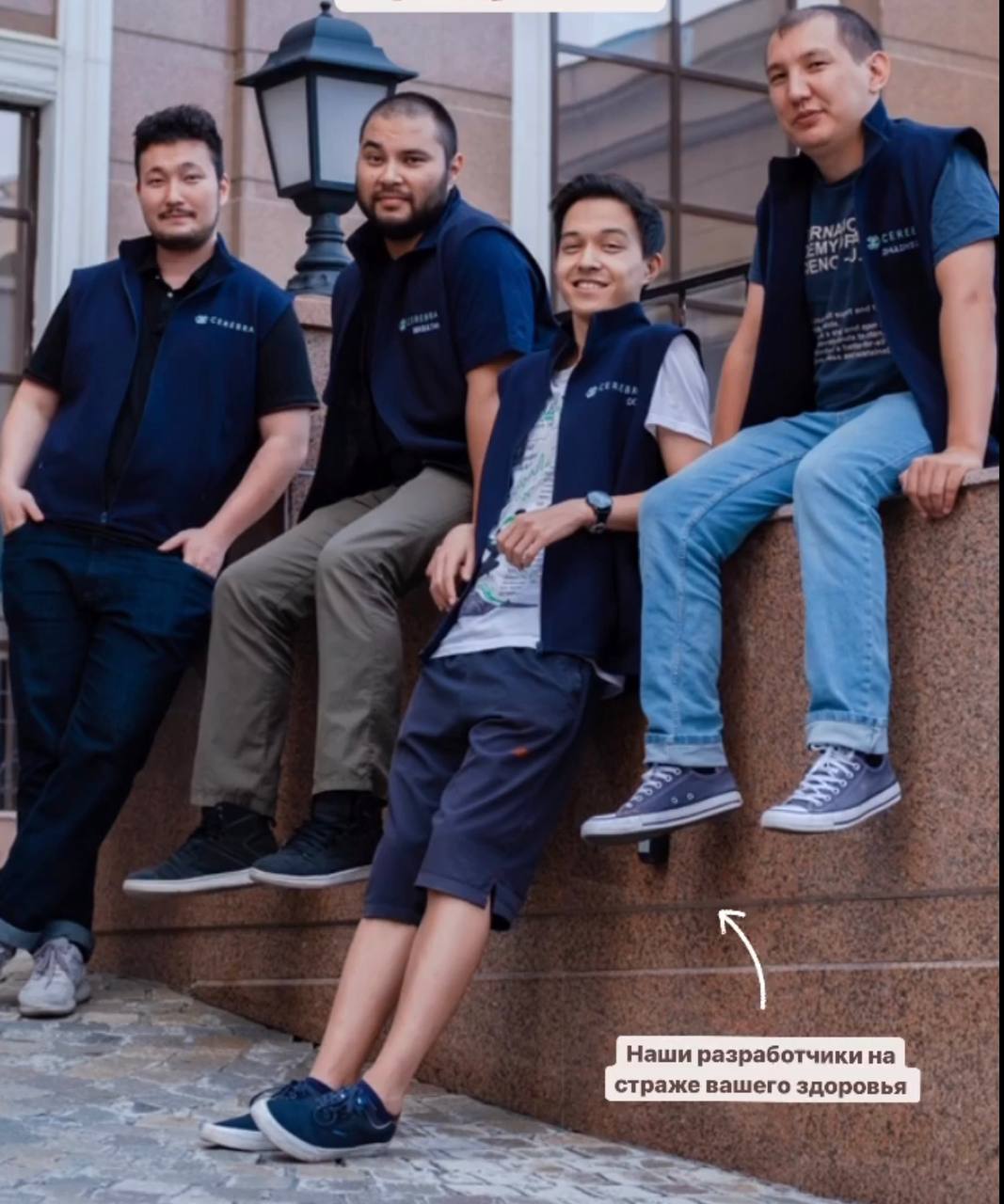
CerebraAI, which develops an AI-powered solution for early stroke detection, has successfully closed its Seed 2 funding round.
The round was led by venture fund Big Sky Capital. Other investors included Most Ventures, Aloqa Ventures, Uzcard Ventures, and private investors including Timur Turlov, UMAY Angels, and Ynta Group. Most investors agreed that the startup's final valuation would be determined within three years, while others accepted the current pre-money valuation of $12 million.
Adil Nurgozhin, Managing Partner at Big Sky Capital, expressed confidence in CerebraAI's global potential and a willingness to support the startup on its path to success in the U.S. market.
On behalf of the community, we congratulate everyone involved, including the data science team led by Zhuldyz-Zhan Sagimbayev.
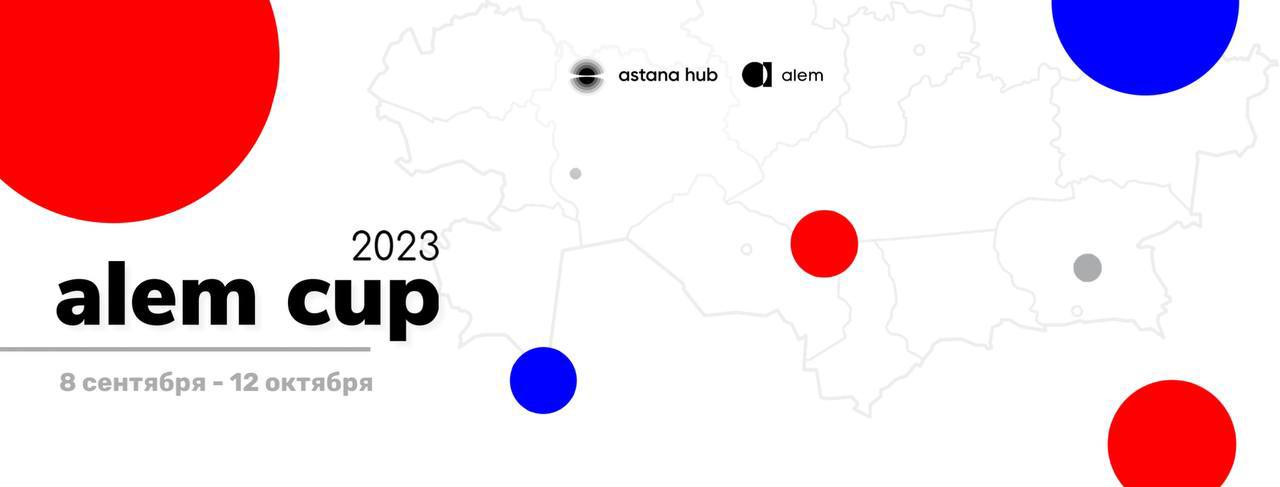
The annual Alem Cup 2023 programming championship began on September 8. It is organized by alem school with support from the Astana Hub international technology park. Participants compete for cash prizes by creating bots that battle other players in a computer game. People of any age and background can take part.
The prize pool is:
Your code will run every 15 minutes against code from participants at a similar skill level. A win adds ranking points and a loss removes them. A new ranking is formed after each round of arena games. The three highest-ranked players advance to the final.
Supported programming languages: Python, C++, JS, Go, Pascal, Java, PHP, C, C#, Ruby, Kotlin, Blockly.
The championship runs until October 12.
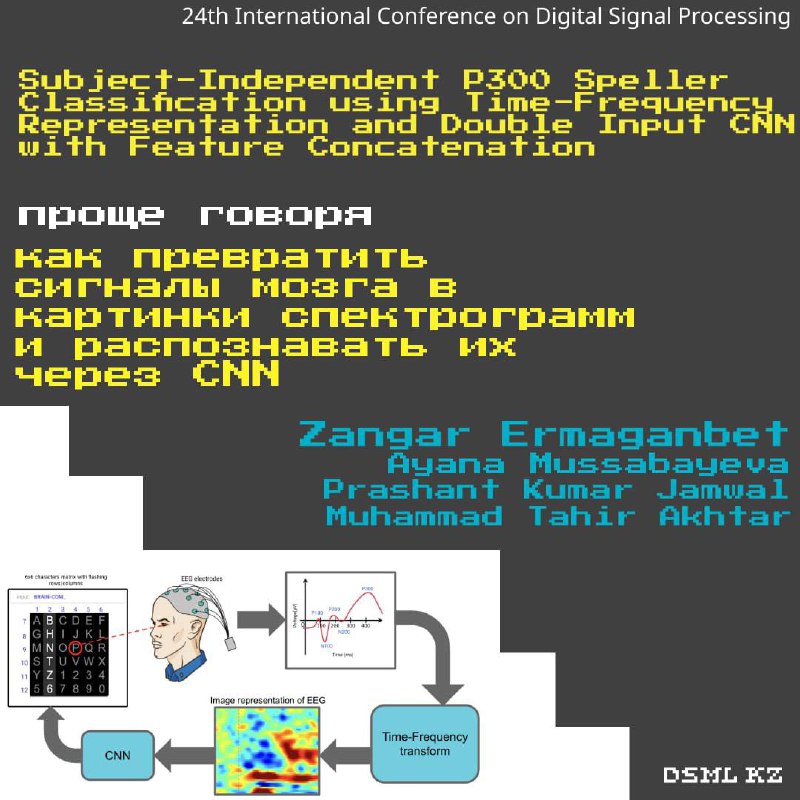
The 24th International Conference on Digital Signal Processing (DSP2023) took place in Greece this summer, featuring papers on digital signal processing and machine learning. DSML KZ members Zangar Yermaganbet @goofymonarch and @Ayana_Mussabayeva, together with NU professors, presented a paper on a double-input CNN used in spelling systems for people with amyotrophic lateral sclerosis.
A P300 Speller flashes symbols on a screen. When the user sees the symbol they want to type light up, it is treated as the target response. The task becomes binary classification: either the signal is a target and the user wants to type the highlighted symbol, or it is not.
The authors generate two types of spectrograms from EEG brain signals using independent component analysis and the Fourier transform, then pass the spectrograms through a double-input CNN.
The reported results show that the method is more effective than classical classifiers used in BCI systems, such as SVM and LDA.
The full paper is openly available on ResearchGate.
Source: arxiv.org/abs/1706.03762
September 3, 18:00. Venue: Jimmy Yamazaki's stream at twitch.tv/yamazakij
Speaker: Jimmy Yamazaki
About the talk: We will examine the paper and its mechanisms in detail, try to understand how and why attention works, dive deep into transformer architecture, write code, and even train models on small datasets. You can ask questions throughout the talk, and the speaker will be happy to answer them.